
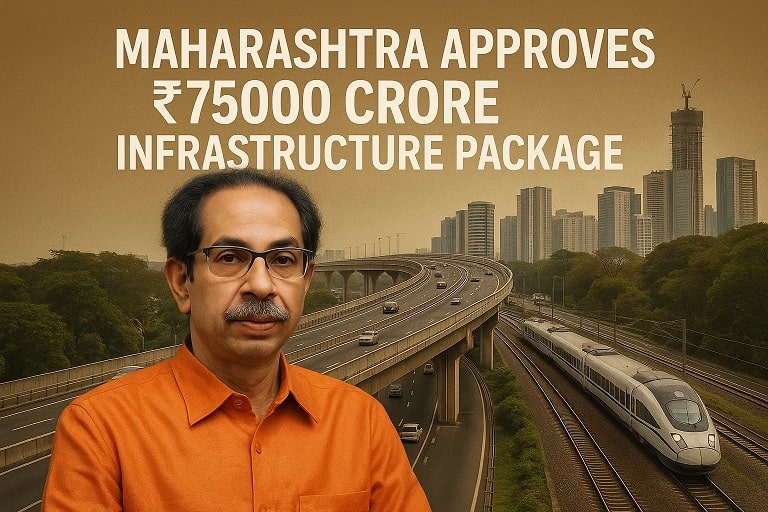
Maharashtra Approves ₹75,000 Crore Infrastructure Package: A Catalyst for GrowthInfrastructure
On September 4, 2025, the Maharashtra Cabinet, led by Chief Minister Devendra Fadnavis, greenlit a ₹75,000 crore infrastructure package to revolutionize urban transport, enhance connectivity, and bolster social welfare across the state. Key projects include Metro Line 11 (Anik Depot–Wadala to Gateway of India), new suburban rail corridors, and upgrades to welfare schemes like Sanjay Gandhi Niradhar Yojana. This ambitious initiative positions Maharashtra as a leader in India’s infrastructure drive, aligning with the national PM Gati Shakti plan. This article delves into the drivers behind the package, its historical context, future outlook, and impacts, highlighting Tamil Nadu’s potential role as a supplier of critical materials.
Why This Package Matters
As India’s economic powerhouse, contributing 13.3% to national GDP, Maharashtra relies on robust infrastructure to sustain growth, with Mumbai alone driving 2.5% of India’s economic output. The package targets urban congestion, industrial connectivity, and citizen welfare, aiming to propel Maharashtra toward a $1.5 trillion economy by 2030. For Tamil Nadu, a manufacturing hub for cement, steel, and electronics, this creates opportunities to supply materials and tech solutions, particularly from Chennai and Coimbatore, strengthening inter-state economic ties.
Latest Developments Driving the Package
The ₹75,000 crore package, approved on September 4, 2025, during a Cabinet meeting at Sahyadri Guest House, focuses on transformative transport and welfare projects. Key highlights include:
- Metro Line 11: A ₹23,487.51 crore project linking Anik Depot–Wadala to the Gateway of India, extending Metro Line 4 (Wadala–Thane–Kasara Vadavli). Managed by Mumbai Metro Rail Corporation Limited (MMRCL), it aims to reduce Mumbai’s chronic traffic bottlenecks.
- Suburban Rail Expansion: ₹14,907 crore allocated for 136 km of new corridors, including Panvel–Vasai, Kasara–Asangaon, and Badlapur–Karjat, enhancing suburban mobility.
- Pune-Lonavala Rail: ₹5,100 crore for third and fourth railway lines to improve connectivity between Pune and Lonavala, a key industrial corridor.
- Local Train Modernization: ₹4,826 crore to procure 238 air-conditioned local trains under MUTP-3 and MUTP-3A, upgrading Mumbai’s commuter network.
- Welfare Enhancements: A ₹1,000 monthly pension increase for 4.5 lakh beneficiaries under Sanjay Gandhi Niradhar Yojana and 24,003 under Shravanbal Seva Rajya Pension Scheme, costing ₹450 crore annually, effective October 2025.
- Funding Mechanism: The package combines state funds and loans, with the Maharashtra Urban Infrastructure Fund (MUINFRA) streamlining project execution, as reviewed by CM Fadnavis on August 26, 2025.
Tamil Nadu’s Context
Tamil Nadu’s cement industry (40 million tonnes annually) and steel production can supply Maharashtra’s construction needs, while Coimbatore’s tech startups could provide IoT and smart city solutions. Tamil Nadu’s own infrastructure projects, like the East Coast Road, align with Maharashtra’s connectivity goals, fostering potential collaboration.
Historical Context of Maharashtra’s Infrastructure Investments
Maharashtra has a legacy of bold infrastructure initiatives, often grappling with fiscal and execution challenges:
- 2015: ₹7,529 crore approved for NH-6 widening, boosting freight movement.
- 2018: Sought ₹50,000 crore from the 15th Finance Commission for Mumbai’s infrastructure, citing its tax contributions.
- 2022: PM Modi launched a ₹75,000 crore package, including Samruddhi Mahamarg (₹55,000 crore) and Nagpur Metro Phase-I (₹8,650 crore).
- 2023: ₹53,058 crore budgeted for projects like Pune Ring Road (₹27,000 crore) and Revas-Reddi Coastal Highway (₹9,573 crore).
- 2024: MMRDA allocated ₹41,955 crore for Mumbai projects, including Thane-Borivali Tunnel (₹18,800 crore).
- 2025: ₹3,162 crore Nagpur-Gondia Expressway approved, cutting travel time to 75 minutes.
The 2025 package builds on these efforts, addressing fiscal concerns after the state’s deficit hit ₹2 lakh crore in 2024.
Future Scopes and Projections
The package aims to transform Maharashtra’s infrastructure by 2030, supporting economic and social goals. Projections include:
- Urban Mobility: Metro Line 11 and rail corridors could reduce Mumbai commute times by 20%, serving 3,000 passengers per hour per direction.
- Job Creation: 50,000 jobs, with 10,000 in construction and 5,000 in Tamil Nadu’s supply chain.
- Export Growth: Improved connectivity to JNPT and Navi Mumbai Airport could boost exports by 15%, with Tamil Nadu supplying ₹5,000 crore in materials.
- Green Infrastructure: PM Gati Shakti integration promotes sustainable projects, with Tamil Nadu’s green tech firms contributing solutions.
Long-Term Strategic Outlook
By 2035, Maharashtra targets:
- Metro Expansion: Completing Thane Circular Metro, Pune Metro Lines 2 and 4, and Nagpur Metro Phase-2, adding 100 km of rail.
- Statewide Connectivity: Linking 24 districts, boosting GDP by ₹50,000 crore.
- Welfare Sustainability: Supporting 10 lakh pension beneficiaries.
- Challenges: Managing fiscal deficits, land acquisition delays, and environmental concerns.
Impacts on the Indian Economy and Stakeholders
The package reinforces Maharashtra’s economic dominance, with benefits for Tamil Nadu’s industries.
Sector-Wise Impacts
Transportation
- Impact: Metro and rail projects ease congestion for 1 crore Mumbai commuters.
- Economic Contribution: Adds ₹20,000 crore to GDP, with Tamil Nadu supplying ₹2,000 crore in materials.
- Business Opportunities: Chennai’s cement firms could secure contracts.
Construction and Materials
- Impact: Demand for cement and steel boosts Tamil Nadu’s industries.
- Economic Contribution: ₹5,000 crore in supply chain revenue, with Tamil Nadu at 40%.
- Business Opportunities: Coimbatore’s IoT startups could support smart infrastructure.
Social Welfare
- Impact: Pension hikes enhance rural purchasing power for 4.74 lakh beneficiaries.
- Economic Contribution: Adds ₹450 crore annually to local economies.
- Business Opportunities: Tamil Nadu’s fintech firms could streamline payments.
Impact Snapshot
|
Sector |
Project/Initiative |
Tamil Nadu Impact |
|---|---|---|
|
Transportation |
Metro Line 11, Rail Corridors |
Chennai supplies construction materials |
|
Construction |
Infrastructure Projects |
₹2,000 crore in cement/steel contracts |
|
Welfare |
Pension Hikes |
Fintech solutions for disbursements |
|
Market Size (2030) |
₹50,000 crore (Maharashtra) |
₹5,000 crore from Tamil Nadu |
Frequently Asked Questions (FAQs)
What is included in the ₹75,000 crore package?
It covers Metro Line 11 (₹23,487 crore), suburban rail corridors (₹14,907 crore), Pune-Lonavala rail lines (₹5,100 crore), local train upgrades (₹4,826 crore), and pension hikes, approved on September 4, 2025.
How does it benefit Maharashtra?
It reduces urban congestion, creates 50,000 jobs, and supports a $1.5 trillion economy by 2030.
How can Tamil Nadu contribute?
Its cement, steel, and tech industries can supply materials and IoT solutions, contributing ₹5,000 crore by 2030.
What are the challenges?
Fiscal deficits (₹2 lakh crore), land acquisition delays, and environmental concerns could slow progress.
How does it align with national goals?
It supports PM Gati Shakti, enhancing connectivity and exports.